 EN
EN

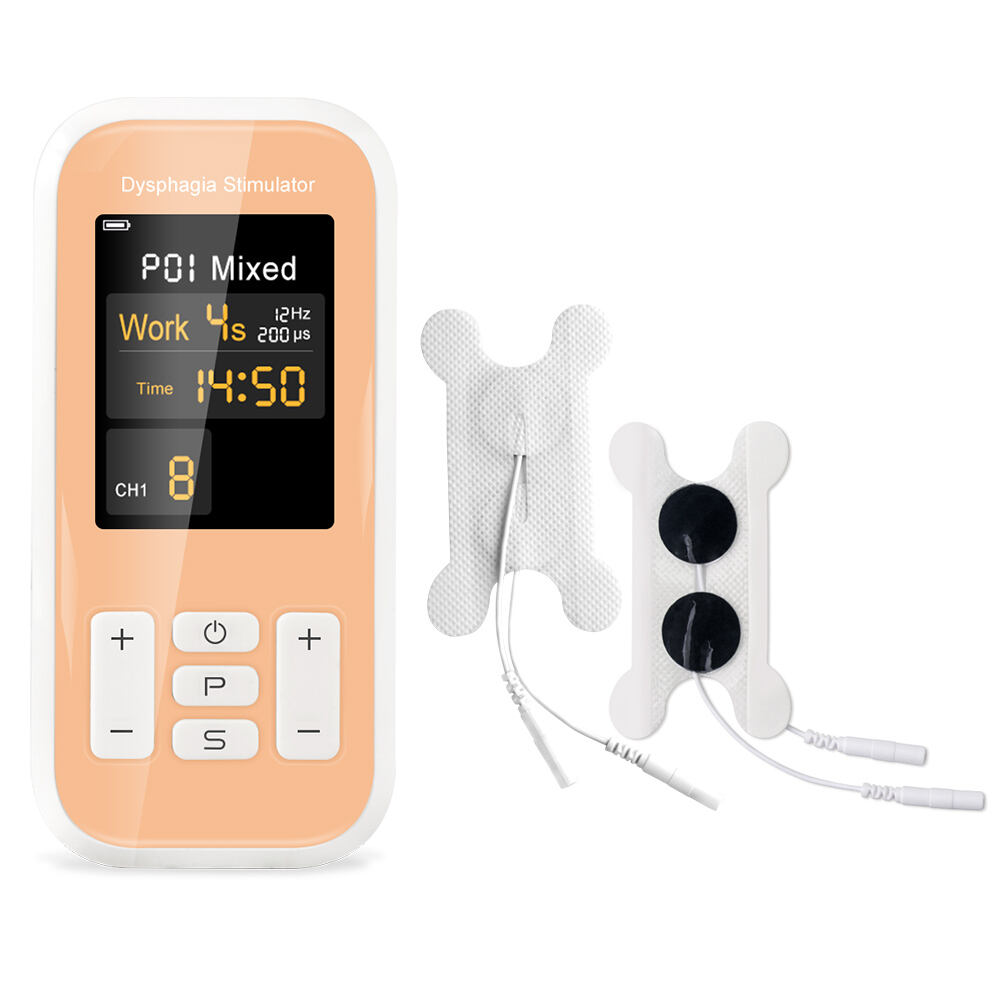
Neuromuscular Stimulator: Awaken Swallowing Function and Regain "Eating Freedom"
Choking on water and difficulty in eating are common for patients with dysphagia. Most of these people suffer from stroke sequelae, post-head and neck tumor surgery, or age-related degeneration. Dysphagia not only affects the quality of life but also may cause life-threatening risks such as aspiration and pneumonia.
As a non-invasive rehabilitation device, the Neuromuscular Stimulator (NMES) awakens swallowing muscles through scientific electrical stimulation, bringing hope for recovery to patients. This article will explain its working principle, applicable scenarios and key usage points to help you quickly understand this rehabilitation technology.
First, Understand: What is Dysphagia?
Swallowing is a complex process that requires the coordination of multiple muscles and nerves, divided into oral, pharyngeal, and esophageal phases. Abnormalities in any phase can lead to dysphagia.
Common causes include stroke, traumatic brain injury, Parkinson's disease, post-head and neck tumor surgery, age-related degeneration, etc. ICU intubation may also induce it.
The core problem of patients is weakness of swallowing muscles and weakened reflexes, resulting in symptoms such as choking and food residue. In severe cases, they need to rely on gastric tubes, and the mortality rate of pneumonia caused by aspiration is higher.
Neuromuscular Stimulator: How to "Awaken" Swallowing Muscles?
The neuromuscular stimulator outputs low-frequency current through epidermal electrodes to stimulate nerves and muscles related to swallowing, helping to restore function. Its core functions are threefold:
- Activate Neural Pathways: Stimulate related nerves, rebuild the swallowing reflex arc, and relieve neuronal paralysis.
- Strengthen Muscle Strength: Simulate muscle contraction signals to prevent atrophy and enhance the strength and endurance of swallowing muscles.
- Improve Coordination: Some devices are equipped with electromyographic feedback to help patients adjust swallowing movements and improve coordination.
It does not require active effort from patients and is suitable for people who are weak and unable to cooperate with traditional training.
Who is Suitable? Who Should Be Cautious?
Neuromuscular stimulators have clear indications and contraindications, which must be strictly followed to avoid risks.
Suitable Population (Indications)
- Neurogenic disorders: Dysphagia caused by stroke, traumatic brain injury, Parkinson's disease, etc.; children with cerebral palsy (low-intensity mode);
- Postoperative and degenerative disorders: Dysphagia after head and neck tumor surgery, age-related degeneration, and post-ICU extubation;
- Others: Patients with weak swallowing muscles, weakened reflexes, including those with sarcopenic dysphagia.
Contraindicated Population (Absolutely Forbidden)
The following groups are strictly prohibited from using it to avoid dangers:
- People with metal implants in the neck (such as cardiac pacemakers);
- Patients with carotid sinus sensitivity or uncontrolled epilepsy;
- People with damaged, infected, or allergic skin in the anterior neck;
- Pregnant women and patients with malignant tumors.
Usage Guide: Use This Way for Better Rehabilitation Effect
Usage must follow the principles of "accurate assessment, standardized operation, and combined training", and it is recommended to be carried out under the guidance of a rehabilitation therapist.
Step 1: Preoperative Assessment (Key Premise)
Before use, professional assessments such as the Water Swallowing Test and swallowing angiography are required. Doctors will set personalized parameters and determine the electrode placement position based on the results.
Step 2: Standard Operation Process
- Clean the anterior neck skin to ensure it is dry and oil-free to avoid uneven stimulation;
- Attach the electrode pads as instructed to ensure close fit;
- Start the device according to the preset parameters, and gradually adjust from low intensity to a tolerable level;
- Each treatment lasts 20-30 minutes, 1-2 times a day, 5 times a week, with 10 days as a course of treatment. The course of treatment needs to be adjusted as needed;
- After treatment, remove the electrode pads, clean the skin and observe for any discomfort.
Step 3: Combined Training for Doubled Effect
Combining with traditional training, other physical therapy or nutritional support can achieve better results:
- Cooperate with routine training such as orofacial muscle training and empty swallowing;
- Combine with transcranial direct current stimulation (tDCS) to reduce the risk of aspiration;
- Ensure nutritional intake to provide energy for rehabilitation.
Common Questions and Answers: Avoid These Misunderstandings
Question 1: Will there be pain during use?
Under normal circumstances, you will only feel slight muscle contraction and numbness, without obvious pain; if there is pain, you need to adjust the parameters or electrode position. The device is equipped with a safety protection system, so there is no need to worry too much.
Question 2: Can I eat normally immediately after use?
No. Swallowing rehabilitation requires long-term persistence. Most patients will have reduced choking after 1-2 courses of treatment, and gradually transition to a normal diet. Do not rush for quick results.
Question 3: Can I buy and use a home device by myself?
It is not recommended to buy and use it by yourself. The electrode placement and parameters are different for different types of dysphagia. Self-operation may affect the effect or cause discomfort. You need to be evaluated by a hospital first and use it under professional guidance.


